バナー
  • Precision Stamping Mold Parts Tolerance Standards: Industry-General Dimensional Datums
    Precision Stamping Mold Parts Tolerance Standards: Industry-General Dimensional Datums Apr 29, 2026
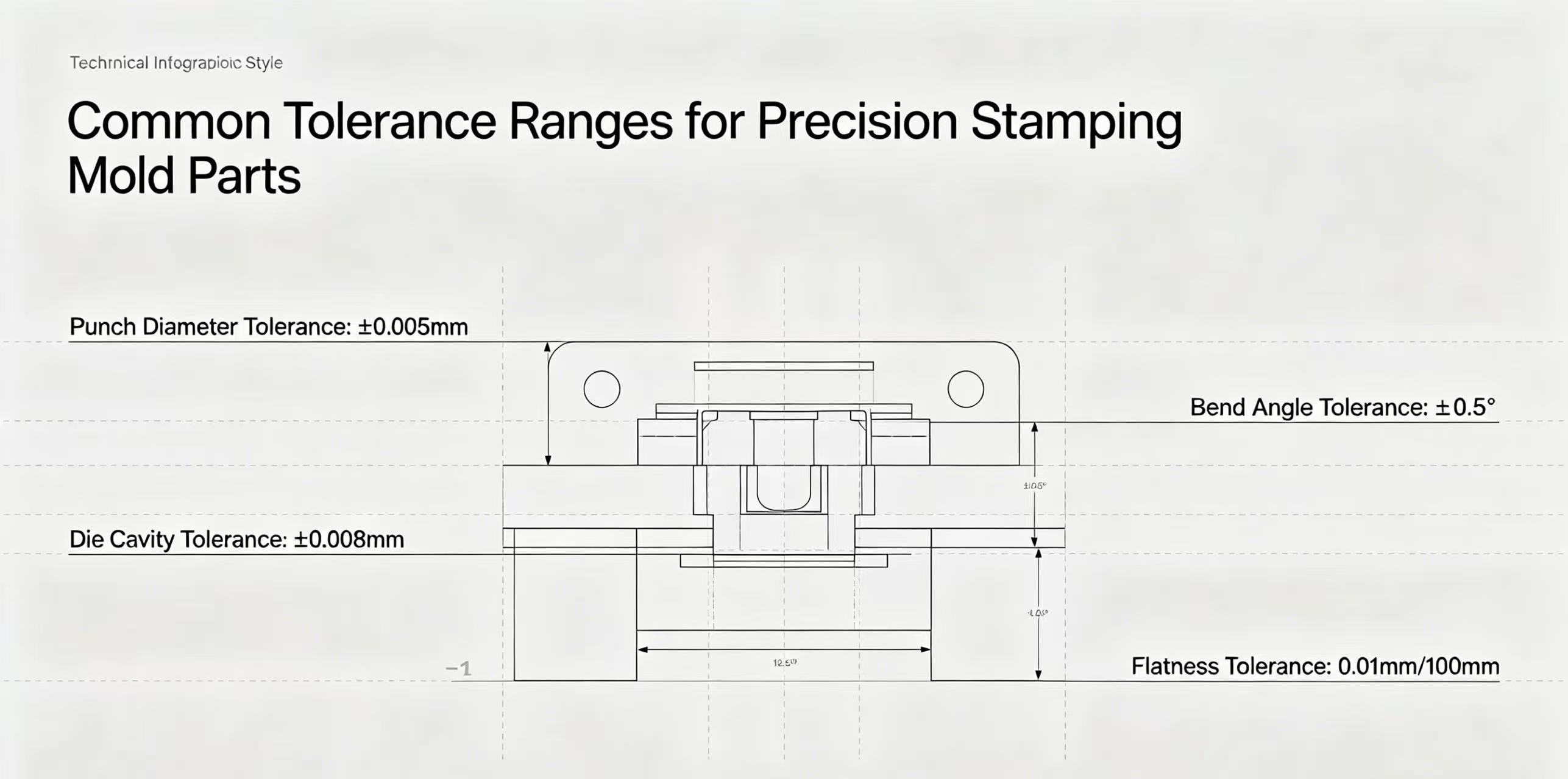
    In precision manufacturing, even minor deviations can cause costly failures or poor assembly. Tolerance standards and dimensional datums are critical for reliable precision stamping mold performance, enabling consistent, high-quality components for automotive, aerospace, electronics.   What Are Tolerance Standards for Precision Stamping Mold Parts? Tolerance standards define allowable variations in mold part size, shape, and position, ensuring seamless functionality and interchangeability. Unlike general stamping, precision stamping requires tight tolerances—typically ±0.001 to ±0.005 inches (±0.025 to ±0.127 mm)—rooted in industry consensus, material behavior, and end-product needs.   These standards balance two key goals: ensuring part interchangeability (for easy batch/manufacturer swaps) and balancing precision with manufacturability, avoiding overly tight tolerances that inflate costs unnecessarily.   Industry-General Dimensional Datums: The Foundation of Tolerance Control Dimensional datums are reference points/lines/planes that standardize tolerance measurements. Without clear datums, precise tolerances become meaningless, leading to misalignment and non-conforming parts. The industry uses a “datum reference frame (DRF)” with three primary datums:   1. Primary Datum (Datum A) The most critical reference (often a flat surface like the mold’s parting surface or base plate bottom), ensuring alignment with the stamping press. It constrains three degrees of freedom (X/Y/Z translation) and sets the baseline for all measurements.   2. Secondary Datum (Datum B) Perpendicular to the primary datum, constraining two more degrees of freedom (X/Y rotation). Typically a side surface, slot, or pin (e.g., a punch shank’s side) to reinforce orientation relative to Datum A.   3. Tertiary Datum (Datum C) Perpendicular to both primary and secondary datums, constraining the final degree of freedom (Z rotation). A small feature (e.g., hole, notch) that fine-tunes position, ensuring full part constraint. Key Industry Standards Governing Tolerances and Datums Global standards provide a common language for manufacturers, ensuring supply chain consistency and clear design communication:   1. ASME Y14.5 (GD&T) The gold standard for geometric dimensioning and tolerancing (GD&T), establishing symbols and rules for part features. Updated in 2018 (reaffirmed 2024), it emphasizes datums for controlling geometric tolerances and is widely used in automotive, aerospace, and electronics.   2. ISO 2768 (General Tolerances) Defines general tolerances for unmarked linear/angular/geometric features, with four classes (F/M/C/V). Most precision mold parts use fine/medium classes, simplifying drawings by reducing redundant tolerance marking. 3. DIN 6930 (Stamped Steel Parts) Tailored for stamped steel, accounting for sheared metal behaviors (e.g., die roll) that affect tolerances. It specifies four accuracy levels for dimensions, concentricity, and symmetry, popular in European automotive/industrial sectors.   4. ISO 8062-3 (Moulded Parts) Focuses on dimensional/geometrical tolerances for moulded parts (including precision stamping molds), defining grades and machining allowances for global consistency.   Common Tolerance Ranges for Precision Stamping Mold Parts Typical ranges balance precision and cost, varying by part function, material, and process: Punches and Dies: Critical surfaces (punch tips, die cavities): ±0.001–±0.005 inches (±0.025–±0.127 mm); non-critical: ±0.005–±0.010 inches (±0.127–±0.254 mm). Guide Pins and Bushings: Diameter/concentricity: ±0.0005–±0.001 inches (±0.0127–±0.0254 mm); clearance: 0.0005–0.001 inches to avoid binding. Mold Bases: Mounting/datum surfaces: ±0.001–±0.002 inches (±0.0254–±0.0508 mm) for press alignment. Blanking/Piercing: Blanking: ±0.05 mm; piercing: ±0.05 mm (diameter/position); precision stamping reduces to ±0.025 mm. Factors Influencing Tolerance Selection Tolerance selection requires balancing four key factors:  End-Product Function: Critical/safety-critical parts (medical/aerospace) need tighter tolerances (often ±0.001 inches) than non-critical components.  Material Properties: Softer materials (aluminum, copper) hold tolerances better than hard materials (high-strength steel), which may require die compensation for springback.  Manufacturing Process: Progressive dies and servo presses enable tighter tolerances; tight-clearance dies (5–10% of material thickness) improve control. Cost: Tolerances tighter than ±0.001 inches require specialized tooling and temperature control, driving up costs exponentially.   In summary, understanding industry-general dimensional datums and tolerance standards is essential for optimizing precision stamping mold performance, reducing waste, and ensuring end-product quality. By adhering to established standards like ASME Y14.5 and ISO 2768, and carefully balancing functional needs with manufacturability, manufacturers can create reliable, cost-effective mold parts that meet the demands of today’s precision-driven industries. As technology advances, these standards will continue to evolve, but their core purpose—providing a consistent, reliable framework for tolerance control—will remain the cornerstone of precision stamping manufacturing.    
  • 電子機器プレス金型用小型精密部品の加工における重要ポイント
    電子機器プレス金型用小型精密部品の加工における重要ポイント Apr 03, 2026
    急速に進化する世界の電子機器業界では、電子製品(スマートウェアラブル、車載電子機器など)の小型化、高精度、信頼性に対する需要が高まっています。これは電子機器の高度化を促進しています。 スタンピング金型技術、特に小型で 精密金型部品―プレス加工製品の品質と耐用年数を左右する主要部品。これらの小型部品(5mm以下、公差±0.01mm)は、超高精度を実現するために、厳格な工程管理と高度な技術に依存しています。 材料選定:精度と耐久性の基盤小型精密プレス成形部品の材質は、加工性、耐摩耗性、および耐用年数に直接影響を与えます。従来のプレス成形金型とは異なり、電子機器用金型部品は高頻度(1時間に数千回)のプレス加工に耐え、寸法安定性を維持する必要があります。そのため、材料選定においては「高精度、高硬度、加工性、安定性」という原則が重要となります。一般的な材料とその用途: 高速度鋼(HSS):小型部品に広く使用されています パンチ, 死亡ガイド付きで、優れた耐摩耗性、加工性、熱処理性能を備えています。熱処理後はHRC 62~65に達し、一般的な電子機器用金型の要件を満たします。 超硬合金: 超精密部品(例:マイクロパンチ)硬度はHRC 85~90で、優れた耐摩耗性を備えています。ただし、脆いため、割れを防ぐため慎重に取り扱ってください。ステンレス鋼/特殊合金:過酷な環境(高温、腐食)に最適です。SUS304、SUS316L、チタンなどの合金は、複雑な条件下(自動車エンジンなど)でも高い信頼性を確保します。 重要なポイント:材料の均一性、純度、表面品質を事前に検査すること。内部欠陥(介在物、亀裂)や表面欠陥(傷、錆)は、精度誤差や金型破損の原因となる。 精密機械加工:寸法制御の中核小型精密電子機器の金型部品には、寸法、形状、位置に関して厳密な精度が求められます。わずか0.005mmのずれでもプレス加工品の不良につながる可能性があります。通常の機械加工では不十分であり、以下の重要な要素に焦点を当てた高度な設備とプロセスが必要です。 旋削加工とフライス加工:基本的な精度を確保する高精度CNC旋盤/フライス盤(位置決め精度±0.001mm)は、単純な形状の部品(シャフト、スリーブ、ガイドピン)を加工します。主なポイント: クランプ安定性:使用 精密治具変形を軽減するため。超小型部品の場合(
  • 炭化タングステン材料の種類と分類
    炭化タングステン材料の種類と分類 Jan 29, 2026
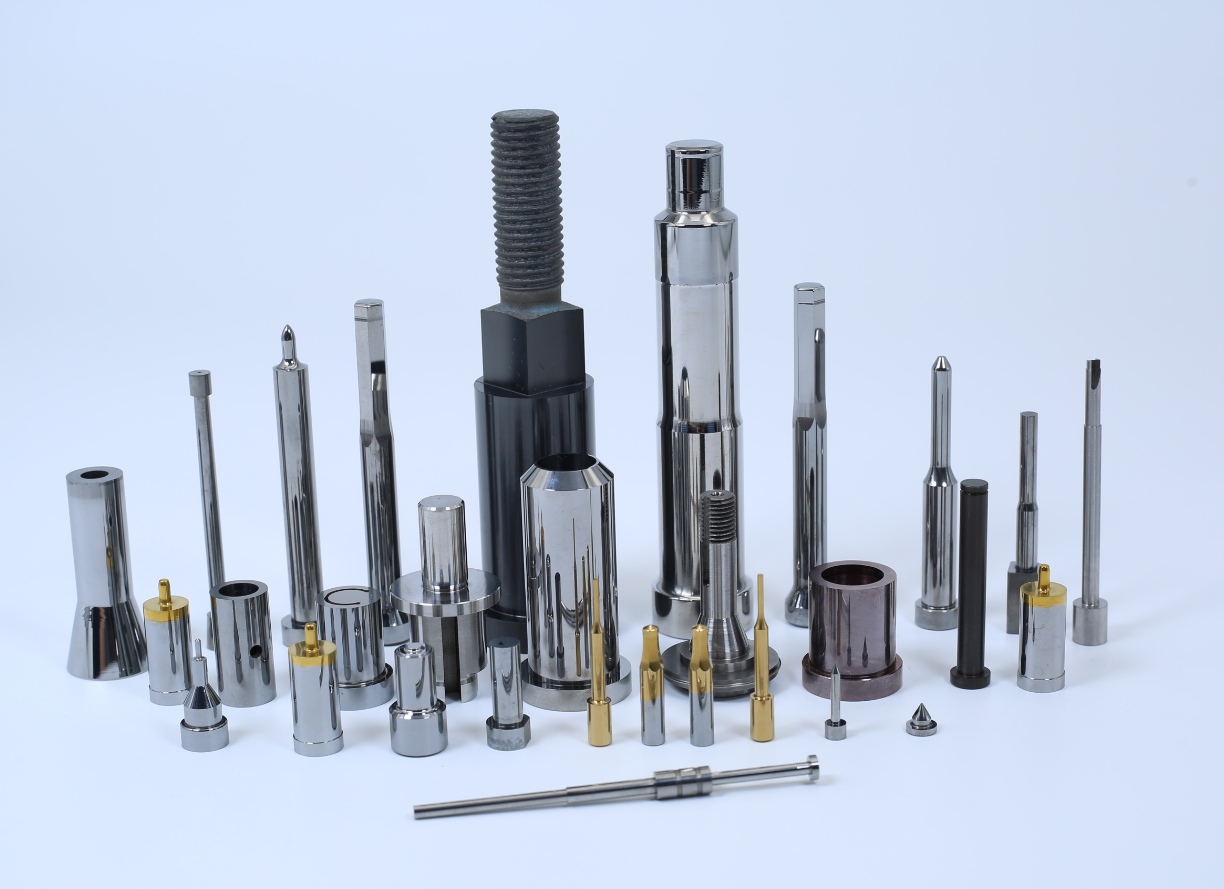
    工業製造の分野では、炭化タングステンは卓越した硬度、耐摩耗性、高温安定性で知られる基礎材料として位置づけられています。 金型部品, 切削工具、 そして 精密部品その多様なタイプと科学的分類は、航空宇宙、自動車、金型加工、そして 精密機械産業.  炭化タングステン(WC)を主硬相とし、コバルト(Co)、ニッケル(Ni)、鉄(Fe)などの金属バインダーを結合相とする焼結複合材料であるタングステンカーバイドは、主にバインダーの種類、炭化タングステンの粒径、そして用途分野によって分類されます。これらは、世界の製造業で認められている3つの主要な基準です。それぞれの分類基準はそれぞれ異なる材料特性に対応しており、様々な産業用途に適しています。 バインダーの種類によって、タングステンカーバイドは 3 つの標準的なカテゴリに分類され、これが材料の基本的な分類フレームワークを形成します。 コバルト結合炭化タングステン(WC-Co):最も広く使用されているタイプで、コバルトを唯一の結合剤として使用しています。優れた靭性、耐衝撃性、高硬度を誇り、加工・成形が容易です。冷間圧造金型の製造に最適です。 描画ダイ、および一般的な切削工具 金型部品業界非鉄金属、プラスチック、一般鋼材の加工に適用可能です。 ニッケル結合炭化タングステン(WC-Ni):結合剤としてニッケルを使用することで、WC-Coに比べて優れた耐食性と耐酸化性を有し、中低温における寸法安定性も良好です。船舶機械部品や化学薬品など、湿気や腐食性の高い産業環境で使用される精密部品に適しています。 機器金型. 多元素バインダー(WC-Ni-Co/WC-Ni-Fe)を用いた炭化タングステン:ニッケル-コバルトまたはニッケル-鉄を複合バインダーとして用いた改良型で、コバルトの靭性とニッケルの耐食性を融合しています。バランスの取れた機械的特性を有し、需要の高い用途で広く使用されています。 精密スタンピング金型合金鋼加工用高速切削工具。 炭化タングステンの粒径は、合金の硬度と靭性に影響を与える重要な分類基準であり、WC 結晶の平均粒子サイズに応じて分類され、ワー​​クピースの加工要件と密接に関連しています。 粗粒炭化タングステン(粒径2.5~6μm):優れた衝撃靭性と耐欠損性を有し、硬度が低いため、荒加工、大型金型成形、岩盤掘削工具などの高負荷作業条件に適しており、加工工程における強い衝撃力にも耐えることができます。 中粒タングステンカーバイド(粒径1.3~2.5μm):硬度、耐摩耗性、靭性の完璧なバランスを備えた最も汎用性の高いタイプで、製造業の主流材料です。 標準金型部品、一般的な切削工具および 精密スタンピングダイス製造業におけるほとんどの中・微細加工要件に適応します。 微粒子炭化タングステン(粒径0.8~1.3μm):高硬度で耐摩耗性に優れ、靭性はやや劣ります。微細加工に適しています。 精密金型部品 (ハードウェア部品用の極小サイズのタングステン鋼金型コアなど) 高精度切削工具ワークの高い仕上がりと寸法精度を確保できます。 超微粒子炭化タングステン(粒径0.2~0.5μm):超高硬度(HRA≧93)と極めて優れた耐摩耗性を備えた炭化タングステン材料の最高級グレードです。超精密加工、マイクロ金型製造、高速ドライ切削工具などに使用され、ハイエンド製品の中核素材となっています。 精密ハードウェア金型部品処理。 実際の産業用途では、タングステンカーバイドは、材料の選択と調達の利便性のために、応用分野別に分類されており、より直感的で企業の実際のニーズに沿ったものとなっています。 金型用タングステンカーバイド: 金型製造向けにカスタマイズ寸法安定性と耐変形性に優れ、冷間加工用金型グレード(スタンピング、絞り加工、冷間圧造用)、熱間加工用金型グレード(ダイカスト、鍛造用)、精密金型グレード(マイクロ金型、光学金型用)に分かれており、ハードウェア金型部品業界における中核的な応用分野となっています。 切削グレードの炭化タングステン: 切削工具用に最適化されており、高硬度と耐摩耗性を備え、旋削、フライス加工、穴あけなどの切削プロセスに適しており、さまざまなワークピース材料 (鋼、非鉄金属、非金属材料) に合わせてグレード選択できます。 耐摩耗グレードの炭化タングステン:耐摩耗性を重視し、靭性に対する要求は低く、製造に使用される。耐摩耗部品のような ノズルベアリング、ガイドレールなどに使用され、製造業の生産設備の補助部品として幅広く利用されています。 鉱業グレードの炭化タングステン:超耐衝撃性を備え、岩石破砕や鉱石採掘の過酷な作業条件に適応し、ドリルビットやつまようじなどの鉱業ツールの製造に使用されます。 炭化タングステンの選択は、作業条件、加工要件、そして製品のコスト管理を総合的に考慮した体系的な作業です。金物金型部品加工業界では、材料の硬度と靭性のバランスが鍵となります。粗粒および中粒WC-Co合金は高荷重の冷間加工金型に適しており、微粒および超微粒合金は高精度、高強度、高強度の金型に最適です。 マイクロサイズの金型部品同時に、腐食や高温などの特殊な作業条件では、金型の耐用年数を確保するために、ニッケルベースまたは多元素バインダーのタングステンカーバイドを選択する必要があります。 専門メーカーとして タングステンカーバイド加工HongYu社は、先進的な生産設備、洗練された加工技術、そして包括的な製品システムを備え、世界中の製造業のお客様に高品質なタングステンカーバイド部品のカスタマイズ加工サービスを提供することに尽力しています。当社の製品は、スタンピング耐摩耗部品を含む標準および非標準のタングステンカーバイド部品を網羅しています。 精密金型コア、パンチ、その他のハードウェア金型コンポーネント。 

助けが必要ですか?チャットしてみよう

伝言を残す
情報または技術サポートが必要な場合は、フォームにご記入ください。アスタリスク* の付いたフィールドはすべて必須です。
提出する
探している FAQs?
お問い合わせ #
+86 769 832011519

営業時間

11/21 月曜日 - 11/23 水: 午前 9 時 - 午後 8 時
11/24木: 休業 - 感謝祭おめでとうございます!
11/25(金): 午前8時~午後10時
11/26 土 - 11/27 日: 午前 10 時 - 午後 9 時
(すべての時間は東部時間です)

ホームページ

製品

ワッツアップ

連絡先